In a culmination of civic engagement and democratic fervor, the much-anticipated election results for the 2023 general election have been unveiled, casting a spotlight on the political landscape of Forrest County and Mississippi at large.
For the first time since 1979, Forrest County voters flipped the tide "blue," with Democrat voters taking the lead in the governor's race featuring Democratic candidate Brandon Presley facing off Republican incumbent Tate Reeves. Although Reeves won a narrow victory statewide, earning 50.9 percent of the vote to Presley's 47.69 percent, Reeves dropped Forrest County - which he easily won in 2019 - to Presley, who won the county with 49.68 percent of the vote to Reeves' 48.95 percent.
As citizens exercised their right to vote, the air was charged with anticipation, reflecting the diverse opinions and aspirations of the electorate. The unfolding narrative of this election, from spirited campaigns to the intricacies of the voting process, has led to a moment of reckoning.
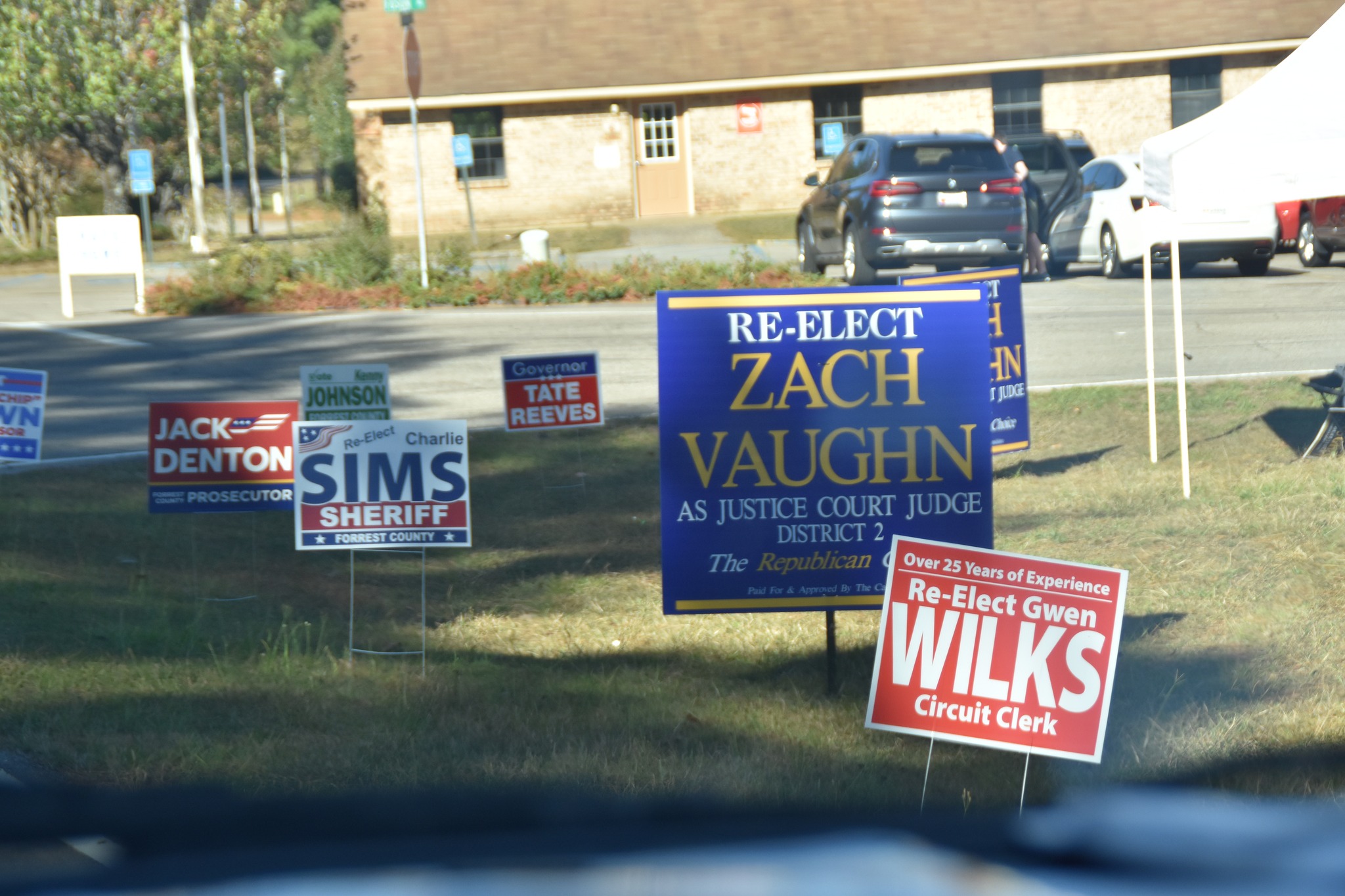 Photo by Cayla Camp Burns of Leeville Community Center on election day
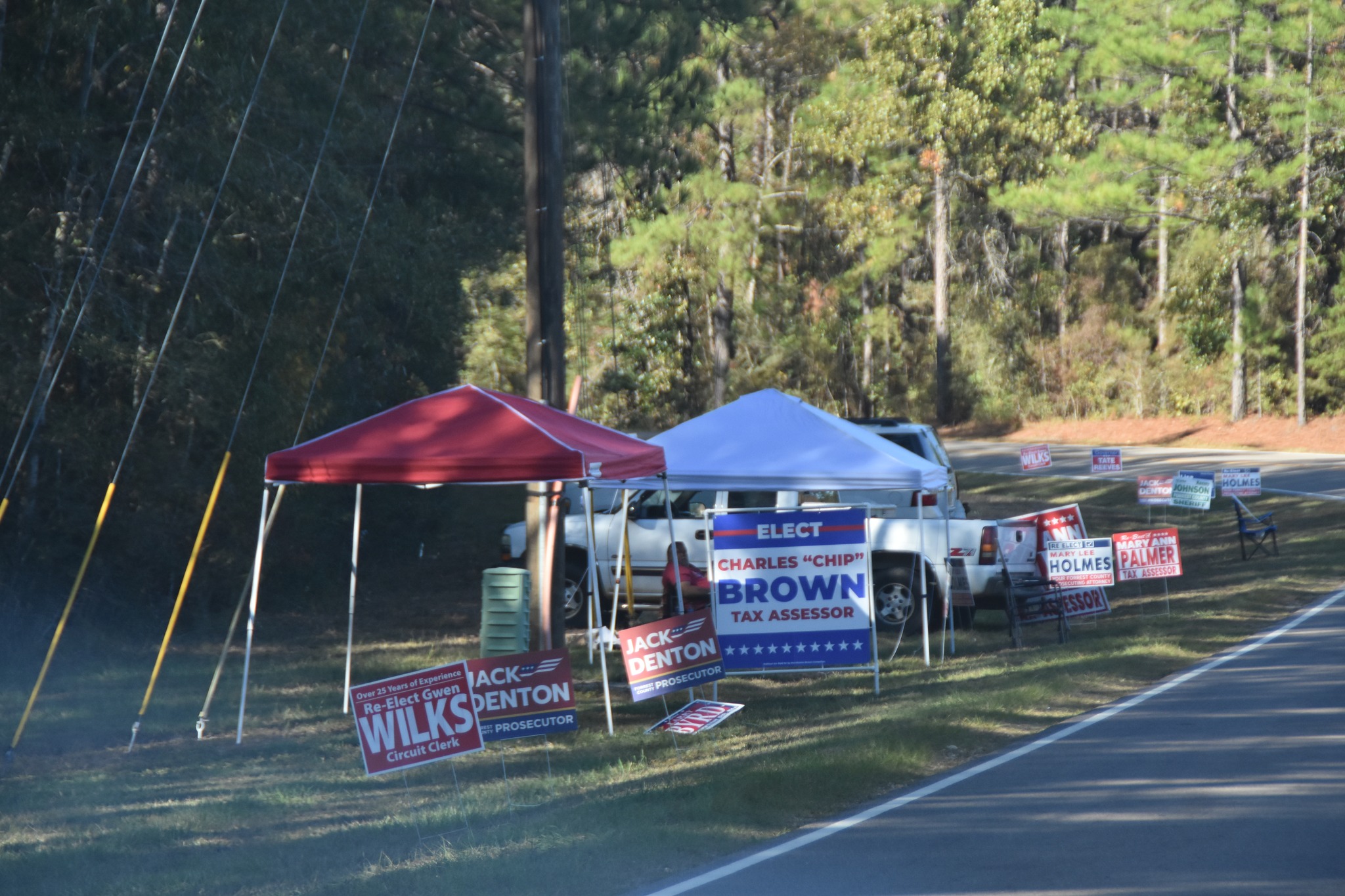 Photo by Cayla Camp Burns
Republican and Democrat voters, representing the two major political parties in the United States, often exhibit diverse perspectives shaped by a range of social, economic, and ideological factors.
Republican voters commonly align with conservative values, emphasizing limited government intervention, free-market principles, and traditional social norms. They often prioritize individual liberties, a strong national defense, and lower taxes as key policy priorities.
Democrat voters, on the other hand, tend to advocate for a more active governmental role in addressing social inequalities, supporting progressive social policies, and emphasizing environmental sustainability. Democrats often champion issues such as universal healthcare, workers' rights, and climate change mitigation.
The political landscape is further nuanced by regional variations, evolving societal attitudes, and the dynamic nature of both parties' platforms, creating a mosaic of perspectives within the broader electorate.
Independent and third-party candidates play a distinctive role in the political landscape, offering an alternative to the traditionally dominant two-party system. Operating outside the constraints of major party affiliations, independent candidates often bring diverse perspectives and unconventional solutions to the forefront.
Third parties, ranging from the Green Party to the Libertarians, contribute to political pluralism by advocating for specific ideologies or policies that might not find a home in the platforms of the major parties.
While facing significant challenges in terms of visibility and resources, these candidates contribute to the democratic process by introducing new ideas, fostering debate, and challenging the status quo. Their impact can extend beyond election outcomes, influencing the broader political discourse and shaping the direction of policy discussions.
The outcomes in this general election race for the governor's seat were intensified by independent candidate Gwendolyn Gray, who despite dropping out of the race prior to the general, was still featured on the ballot and garnered just over 1 percent of the vote countywide and statewide. Gray endorsed Presley on her way out, when she announced her withdrawal from the race.
Without that factor, it is hard to predict what the numbers would have looked like, but had Gray's statewide count of 11,153 votes gone to Presley instead, this would have made the race even closer.
The breakdown of results are as follows:
Statewide:
- (D) Brandon Presley: 391,614 (47.69%)
- (R) Tate Reeves: 418,233 (50.94%)
- (I) Gwendolyn Gray: 11,153 (1.35%)
- Total: 821,000
Forrest County:
- (D) Brandon Presley: 9,134 (49.68%)
- (R) Tate Reeves: 8,999 (48.95%)
- (I) Gwendolyn Gray: 251 (1.36%)
- Total: 18,384
Forrest County was one of just three counties in the state that Presley won in 2023 that Democrat candidate Jim Hood did not win in the 2019 general election for governor. Despite his lead by a narrow margin in Forrest County, the statewide results ended with a less than 3 percent lead for Reeves, securing his second term in office.
Those final results will be reviewed and certified by Michael Watson, secretary of state, in the coming days.
In Forrest County, this historic election was a testimony to the many efforts made by Democratic voters to move the needle and to canvas areas that would otherwise vote "Red." Efforts were made to register new voters and to remind active and inactive voters to get to the polls on November 7, and in some cases transportation was even provided to ensure that happened.
Sue Polk, who serves as District 5 Election Commissioner for Forrest County, told The Pine Belt News that she believes those efforts, in addition to television advertisements, were most likely the reason for the change from red to blue in terms of the voter turnout.
"I'll just say that (Democrats) got out and really worked for it, and as far as I know this is about as close as it's ever been," Polk said. "They went door to door - I know they came by my house to campaign.
"They had a good turnout, and there was extra TV coverage that was done by the Democrat party. So all that helped with that."
Regardless, one thing is for certain: those efforts made this election one to remember, and some might even say that it sent a bold message to the state and county leaders by calling into question current election officials and their ability to maintain the integrity of our democracy. There were a number of issues in the election process, statewide and countywide; none of which were unique or new.
Those who have covered elections and participated in them for any length of time will tell you that these problems have persisted for some time now, and maybe this is what it took to bring it to the attention of those officials who can do something about it.
At the Glendale precinct, which is located in District 2, a jump drive was left behind, which caused a delay in those results being reported. Despite that precinct being in close proximity to Forrest County Circuit Court - where votes were tabulated - it was 9 p.m. or later before the jump drive was retrieved, and results for that precinct were not given to the media until an hour or more later.
The remaining two out of 34 precincts left to report after that were West Hills and Danztler. Those results, including affidavits, were provided for the media at 11:55 p.m. according to the time stamp at the bottom of the final report provided on election night.
Mississippi's voting history is a tapestry woven with the complexities of its deep-rooted societal transformations.
Historically, the state played a significant role in the Civil Rights Movement, marked by struggles against racial segregation and efforts to secure voting rights for African Americans. Forrest County was at the heart of those movements, and not always in a positive manner.
The Voting Rights Act of 1965 was instrumental in dismantling discriminatory barriers, fostering a more inclusive electoral landscape. While Mississippi has evolved from its troubled history, contemporary challenges, including issues related to voter access and representation, persist.
The state's political landscape reflects a mix of conservative values, with the Republican Party having a strong presence in recent decades.
Understanding Mississippi's voting history involves acknowledging its journey towards more equitable participation in the democratic process, shaped by both progress and ongoing debates about the state's political identity.
Forrest County, located in the southeastern part of Mississippi, is characterized by a rich blend of history and modernity. Its county seat, Hattiesburg, serves as a vibrant hub with a diverse cultural and educational landscape.
Home to the University of Southern Mississippi and William Carey University, Forrest County benefits from a dynamic student population and academic influence. The area boasts a mix of urban and rural environments, with a nod to its Southern heritage.
Its historical narrative includes contributions to the Civil Rights Movement, reflecting the broader struggles and triumphs of Mississippi's past. Today, Forrest County stands as a testament to the resilience of its communities, offering a unique blend of tradition and progress.
Many longtime elected officials in Forrest County were challenged by this election and a few were even voted out of office altogether. There is an undeniable chill in the air of politics here, and the voters and candidates alike are working harder than ever to send a message to the establishment.
That message is this: it is time to evolve.
The importance of evolving in terms of government lies in its ability to adapt to the changing needs and aspirations of its citizens. Embracing new ideas and expanding opportunities is crucial for fostering innovation, inclusiveness, and progress.
A government that evolves demonstrates a commitment to addressing contemporary challenges, be they economic, social, or technological. It allows for the development of policies that reflect the diversity of its population and ensures that opportunities are not limited but continually expanded.
By staying open to change and modernization, governments can build resilience, engage citizens more effectively, and create a framework that not only responds to current issues but also anticipates future trends, ultimately contributing to the overall well-being and advancement of society.
To view Forrest County results by precinct, visit https://www.sos.ms.gov/elec.../2023-general-election-results.


