This month’s column is inspired by a very cold missing persons case I recently helped with. As an avid listener of true crime podcasts, I heard the story of missing person May Jane Croft Van Gilder on the “Unfound” podcast back in February 2020. Van Gilder had left her family in the midst of World War II to work at the Shelby Army Air Force Depot in Ohio. Eventually, her children lost contact with her and never heard from her again. Now, in their search to find her, they believed that her employment records from the Depot had been destroyed in a fire at the National Archives in St. Louis in the 1970s. However, I knew that was not true and let the detective handling the case know. This led to the discovery of Van Gilder’s Civilian Personnel File that contained over 85 documents of new information. While she still has not been located, this was a major breakthrough in the case.
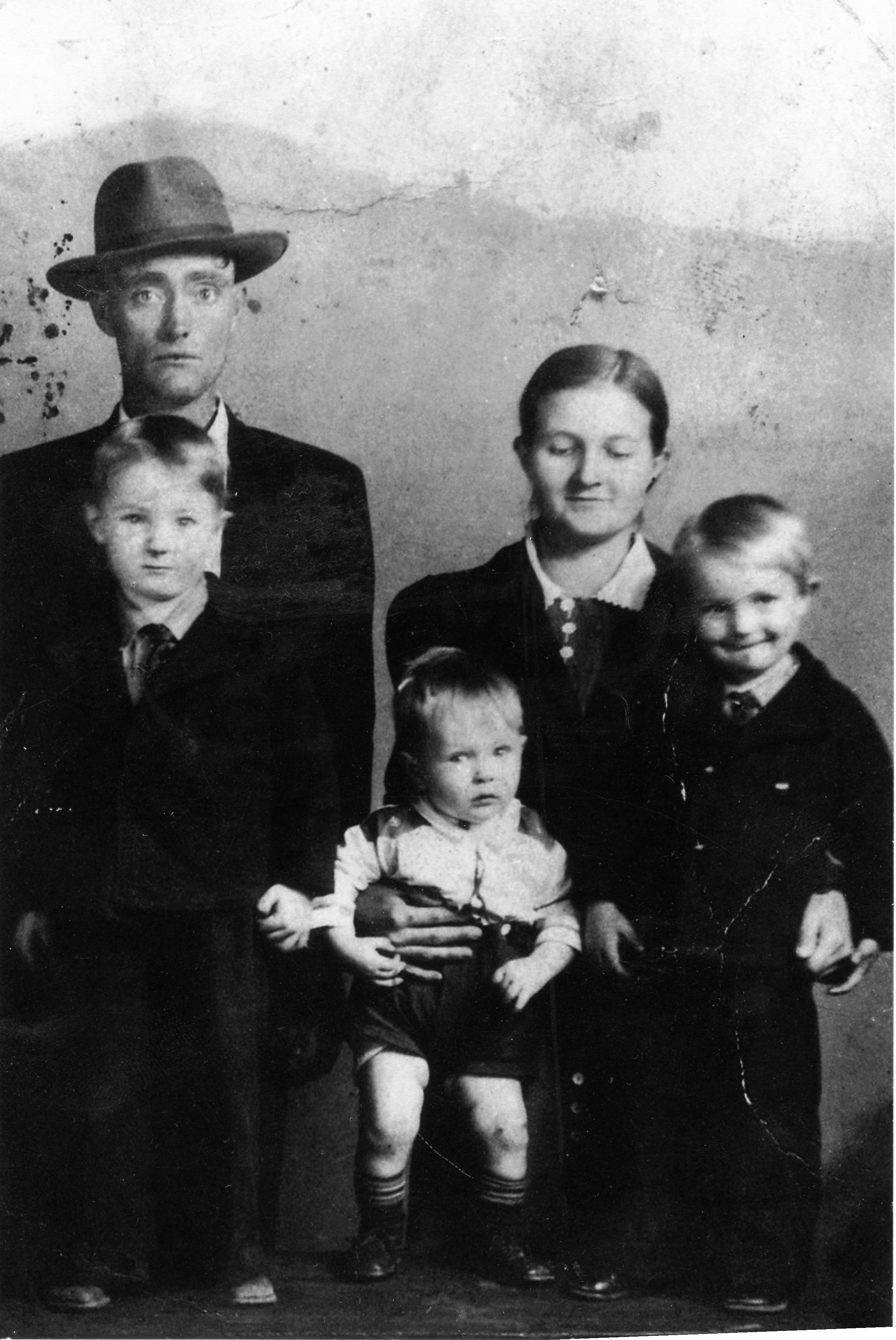
I had learned about the civilian personnel records several years ago from a friend, Southern Miss graduate and former archivist at the Mississippi Armed Forces Museum at Camp Shelby, Ashley McLendon. A few years ago, while living in St. Louis, Ashley worked at the National Archives and was in charge of the Civilian Personnel Files for the Civilian Conservation Corps (CCC), Works Progress Administration (WPA), the War Department, and other federal jobs from the mid-1800s to the 1950s. I had her check the CCC files for my grandfather, Jesse Foster’s name. She didn’t find anything with the CCC, but, surprisingly, found his personnel file under the War Department at Camp Shelby. At one point, I planned to make a stop at the National Archives while in St. Louis for another matter to view the records for myself, at no charge, but it snowed that morning and I was unable to make it. So, when the Van Gilder case came up, I decided to finally order my grandfather’s records. They are a bit pricey but very much worth it. If you have any questions about the records or how to obtain them, feel free to email me at the email address at the bottom of the page. In the meantime, let’s talk about Camp Shelby and civilian workers.
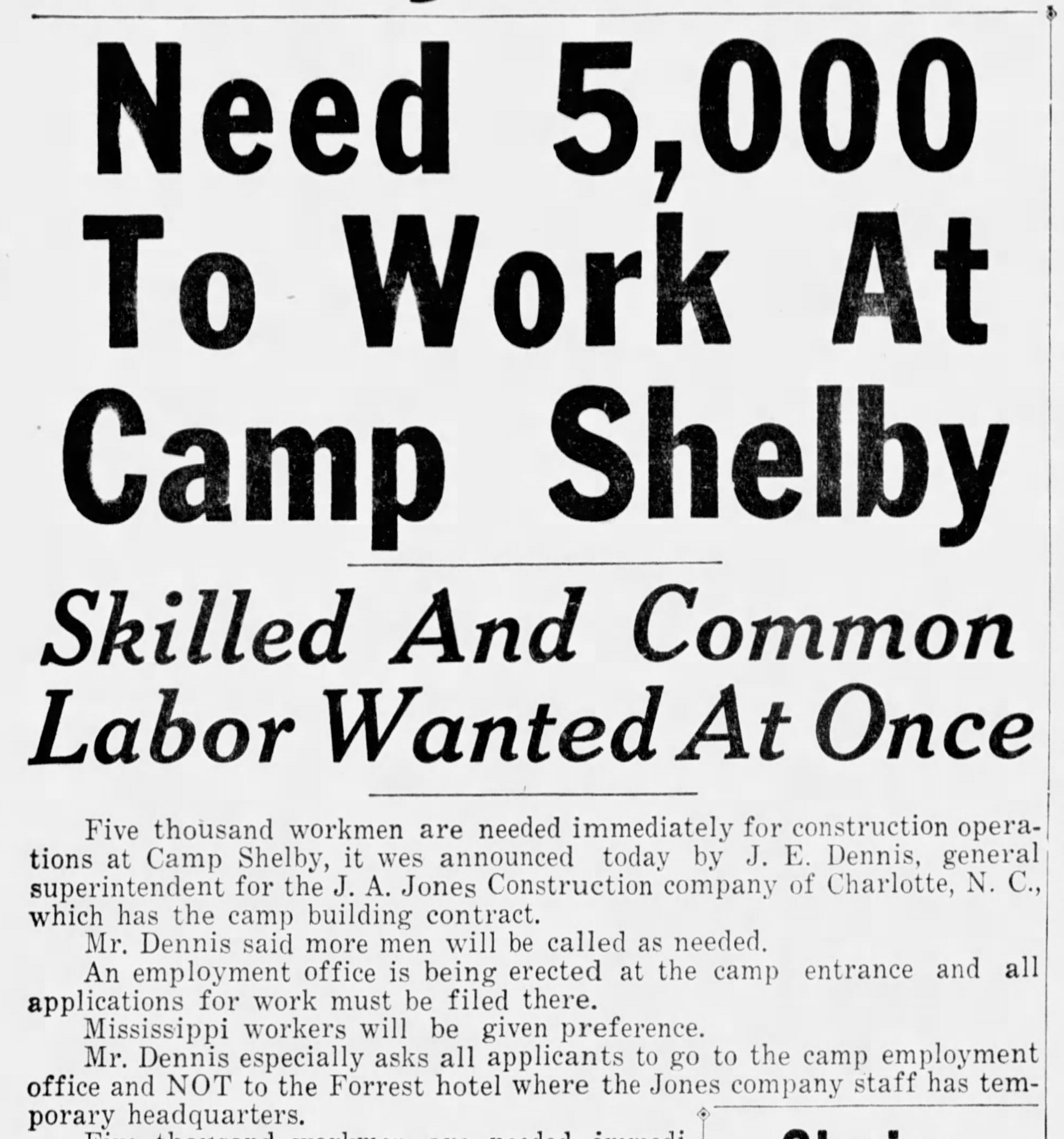
The federal government made the decision to rebuild Camp Shelby in September 1940 in response to events happening in Europe and Asia. The site was established in 1917 to train troops for World War I. Later, it was used by the Mississippi National Guard for military training in the 1930s. The Great Depression had taken its toll on south Mississippi so when construction began on the new facilities, workers flocked to Camp Shelby. The Hattiesburg American advertised on its front page, “Need 5,000 to Work at Camp Shelby.” There was a lot of work to do though in order to build the largest military installation in the United States, second only to Fort Bragg. The original plans called for 58 administration buildings, 14,510 tent frames, 29 infirmaries, 34 post exchanges, 32 recreation buildings, three service clubs, three post offices, 414 total mess halls of various sizes, a cafeteria, 448 latrines, three tent theaters, 49 motor repair shops, 50 gasoline storage buildings, 83 warehouses, four guard houses, 50 officers’ quarters, a telephone and telegraph building, two laundries, a bakery, a cold storage plant, six fire stations, four barracks, three guest houses, three incinerators for trash disposal, 28 ammunition magazines, a 2,000 bed hospital and a finance office building. By the time they were done, roughly 17,000 skilled and unskilled laborers had built Camp Shelby.
Even after the initial construction was complete, other civilian workers were needed throughout the war to serve the approximately 750,000 soldiers who trained at Camp Shelby.
They were both men and women, Black and white. They worked as laundresses, mechanics, construction workers, cashiers, newspaper boys, drivers, nurses, secretaries, cooks and in many other jobs.
Wages were significantly more at Camp Shelby than in the private sector. The 35-year-old Jesse Foster, who traveled from Seminary every day, was making $3.20 per day as a laborer in a sawmill before going to work at Camp Shelby.
There, he was paid 75 cents an hour as a Roofer Helper and later 80 cents an hour as a Junior Auto Mechanic, twice as much as he was making at the sawmill. This was a big deal for men like Jesse Foster who had a wife and five little boys at home with another on the way to provide for.
Many workers quit their jobs in Hattiesburg to go work at Camp Shelby. The Hattiesburg American warned the community when the call for workers first went out in September 1940 to go ahead and get any work done at their home or business because carpenters, plumbers and other maintenance workers may not be available soon. It happened with laundry workers too, and Hattiesburg citizens were forced to begin paying their laundresses, the majority Black women, more. The economic impact of World War II-era Camp Shelby on the citizens of south Mississippi was astounding.
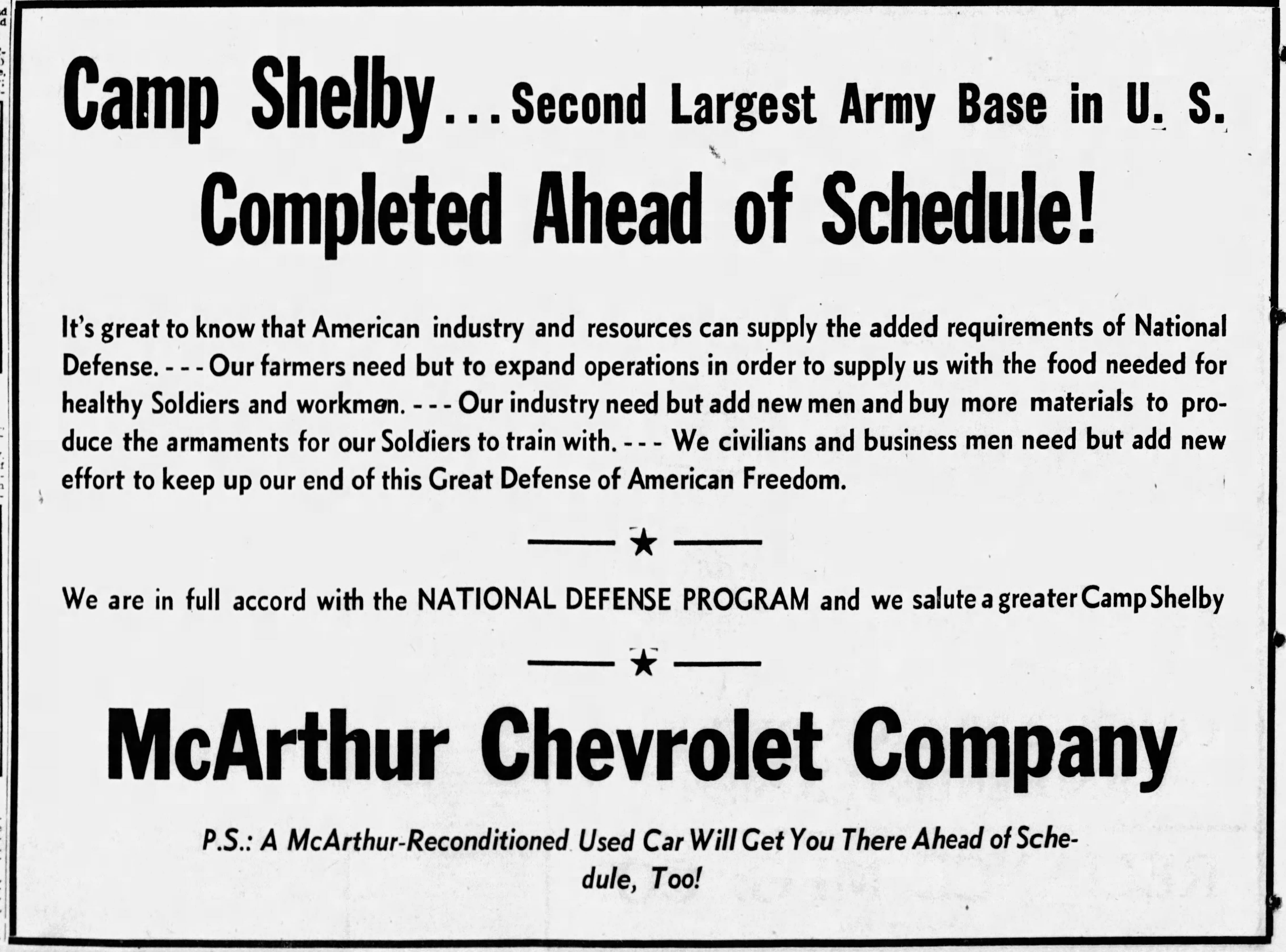
It is estimated that around 5,000 civilians worked at Camp Shelby following the initial construction. They included men and women from around the state, some even from out of state.
A young future Hattiesburg mayor, Bobby Chain, followed his dad, a civilian worker, to work and sold newspapers, making more money than an 11-year-old could use in the 1940s.
Future Civil Rights leaders, such as Victoria Gray Adams and Jesse L. Brown, both worked at Camp Shelby as teenagers. These experiences changed Hattiesburg forever.
Lisa Foster is a historian from Petal. Send her a note at lisacfoster@ymail.com. Sources used for this article include various newspaper articles, the Civilian Personnel File of Jesse A. Foster, as well as William Sturkey’s “Hattiesburg: An American City in Black and White” and Patricia Boyett’s “Right to Revolt: The Crusade for Racial Justice in Mississippi’s Central Piney Woods.”


