Mathematically speaking, life intersects with numerous interests at a variety of points. It never travels in a straight line as its passes through personal changes, political ramifications, societal shifts, and the ongoing pressure of social relationships. Given the journey of that single line, it must endure a vast array of interference - always looking to change its course.
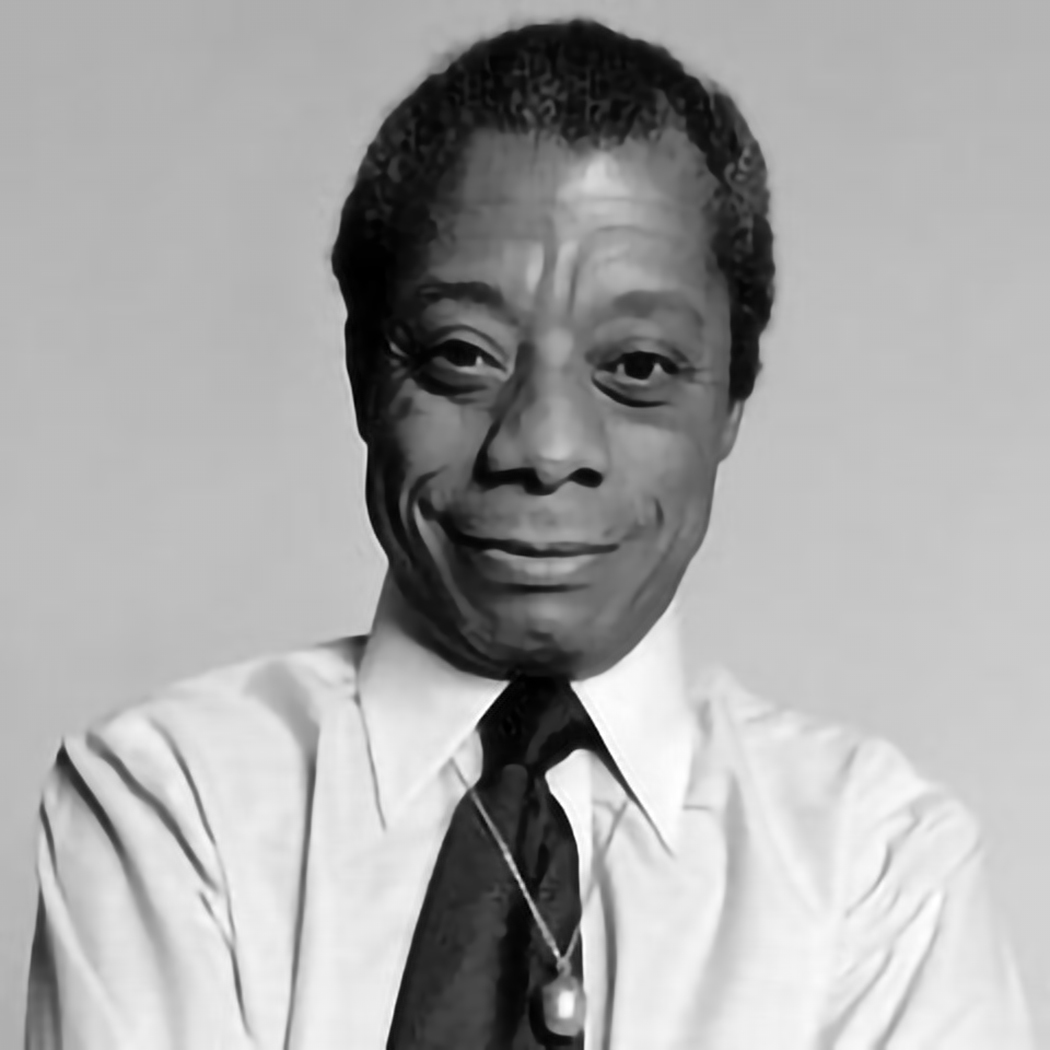 James Arthur Baldwin was a writer of prose, plays, and essays. By the time his first published works as an American overseas in the Fifties, he was already alerting the world to unjust treatment and destroying his idols. For Baldwin, belief is everything. It is the ballast that protects you as life's seas sail into choppy, uncharted waters. It is the shield you use to resist the slings and arrows others hurl at you because you are "different." No other American writer ever traversed the roads of fame and its bright lights while simultaneously maintaining their own core and unwavering belief.
Baldwin's literature is not "protest literature." In fact, he abhorred that trend because it turned the salient colors of the "daily indignities" (to quote his biographer James Campbell) into colorless melodrama. Even in Europe, Baldwin suffered daily assaults on his race and sexuality. His works would need a far different conclusion than for its protagonists to acquiesce and conform.
While in France, Baldwin's writing largely interpreted the events and changes in his life. His coterie shifted from white bohemians set on living like Hemingway and the Lost Generation to fellow African-Americans leaving America because their art was better appreciated (Maya Angelou). This set of experiences was fuel which caught fire with 1953's autobiographical "Go Tell It On The Mountain" and nearly ended in suicide after 1956's "Giovanni's Room."
"Giovanni's Room" is a thoroughly modern "romantic" work rooted in the tragic storytelling of the past. Baldwin is both eager to tell its story and his story, so the lines of where he defines his protagonist David are consistently blurred. In just its first dizzying chapter, Baldwin sets the stage with a failed proposal of marriage and a lover who is facing the guillotine. Beneath the surface, Baldwin reverses his own history (David is mourning not having a mother whose presence is symbolized by a looming portrait that seems to always be prominent in his thoughts of home.) and reveals his first encounter.
The suppression of detail of David's building interest and tryst with Joey is handled with such grace. In the veil of David's releasing these details in a flashback, we are only feeling his emotions. The connection is eminently understandable and even felt through the careful prose Baldwin uses (he expertly remembers the distances between them - so there is no need for verbiage that could extinguish its purity at the moment). What is shocking even today is what comes next. Years removed from this event, David remembers the shame that pours over him. With this downward spiral, young David almost becomes another person. In the context of his writing, Baldwin is allowing this part of himself to show through the character. There is nothing lurid or even exciting about it. It is not even written as a "rite of passage." However, it does feel like an experience that defines who both David and Baldwin are Today.
Finally, just to demonstrate how far ahead of his time Baldwin was, he writes:
"Perhaps, as we say in America, I wanted to find myself. This is an interesting phrase, not current as far as I know in the language of any other people, which certainly does not mean what it says but betrays a nagging suspicion that something has been misplaced."
Baldwin is writing about a time in his life that has reoccurred to him. He is not regaling in it. He is not even ashamed of it. This is his reveal. An event he has carried with him, that has become such a part of him can be explained as "misplaced." His biography here is tied to the character he wants to be. In other places, you almost feel like Baldwin wants to separate himself from this character. At times, he is writing like he has resigned to make this the last time he will talk about it. However, there is so much of Baldwin in his text - this is an aspirational work. "Giovanni's Room" is Baldwin tying the two facets of his identity together and reminding us all that (continuing the earlier quote) "the self I was going to find would turn out to be the same self from which I had spent so much time in flight." Pride.
Mik Davis is the record store manager at T-Bones Records & Cafe in Hattiesburg.
New This Week
As we edge into July, the new release slowdown does not mean there are no worthwhile albums out there. While this week sees the long-awaited vinyl release of Fleet Foxes lockdown-era tribute to nature ("A Very Lonely Solstice") and Nick Cave reading speeches ("Seven Psalms,") this is one week where the off-the-beaten-path holds some true surprises.
MOOR MOTHER - Jazz Codes [LP/CD](ANTI)
YAYA BEY - Remember Your North Star [LP/CD/CS](Big Dada)
In the realm of Experimental/Conscious Hip-Hop, Moor Mother continues to break new ground with every release. Since breaking through with "BRASS (featuring Billy Woods)" (one of 2020's best albums), Moor Mother has been on a championship-style run where she and her collaborators throw out rhymes like ancient Jazzers sprung back to life and full of the wild energy of early Bebop. Like her ANTI debut "Black Encyclopedia of The Air," "Jazz Codes" is lit by big beats and spartan sample-laden grooves. "BARELY WOKE (with Wolf Weston)" is the most soothing burner in her catalog. The EDM backdrop swirls into psychedelia while its driving beat is strangely the most subtle element of the track. Weston raps furiously about "urgency" while Moor Mother is the voice of reason in the mix - both earthy and ethereal. "Jazz Codes" is the union of all styles transmogrified back into "music."
Yaya Bey's songwriting stems from the randomness of melody and autobiography. At her best, she can spin what feels as formative as the earliest version of a song ("Street Fighter Blues" and its Steve Lacy-esque guitar) into a melange of voices and ideas (the production stops and starts in a number of clever ways - we will not spoil). As a whole, the album still feels unfinished and rough around the edges - but some thing tells me that is part of its element of surprise.
GLENN JONES - Vade Mecum [LP/CD](Thrill Jockey/Redeye)
Glenn Jones really stakes his claim on being seen as the prime exponent of John Fahey's magical American Primitive music. While the banjo and guitar are on countless Jones records and he even produced/toured with Fahey, "Vade Mecum" does acoustic guitar music right on so many levels. With his palette of alternate tunings, his guitar can sound both foreign and familiar ("Forsythia.") In addition, when Jones (on banjo) tangles with the violin on the tacet portions of "Ruthie's Farewell" the voicings turn Eastern and their inner harmonies resemble an accordion. However, it is on the acoustic guitar tunes like "John Jackson of Fairfax, Virginia" and the closing beauty "Away" where Jones transcends playing Blues, Folk, or whatever to bring this music up from the earth to the stars. A true stunner packed with more haunting melodies than overt guitar wizardry.
AUTOMATIC - Excess [LP/CD](Stones Throw/Redeye)
This Los Angeles female Post-Punk group pushes themselves far out on the leading edge of PP with their Stones Throw debut. Lola, Izzy, and Halle combine all the right portions of Motorik (the Suicide-ish "New Beginning,") with danceable minimalism (the Young Marble Giants-esque "On The Edge") to make a record that sounds like 1983 never left. The synth sounds are right on point ("Skyscraper" uses them to color its loping, danger-signaling beat) and the percussion is always in the right place (the Wet Leg-ish single "Venus Hour.") Dark but thrilling, "Excess" may set the standard (along with the new Just Mustard) for what could be Post-Post Punk.
PEARLS BEFORE SWINE - The Exaltation of Tom Rapp [LP](Earth Recordings)
Pearls Before Swine and their leader the enigmatic Tom Rapp single-handedly created Acid Folk in the Sixties (which morphed into Freak Folk as it is known today.) Like The Fugs and countless other Folk groups with more subversive songwriting ideas, it was only a matter of time before their apocalyptic visions could use the studio to grow as elaborate as their lysergic dreams. These recordings from Rapp predate Pearls Before Swine's first album in 1967. However, they still carry the same dense-almost-baroque harmonies Rapp will use to frightening effect on "One Nation Underground" and the amazing "Balaklava." While they sound so much more innocent on dirges like "Three Rings," miniatures blossom into studio creations ("The Jeweler") and show how much potential they were already demonstrating on their own. A fascinating set of never-before-heard tracks from a largely-misunderstood group.


